




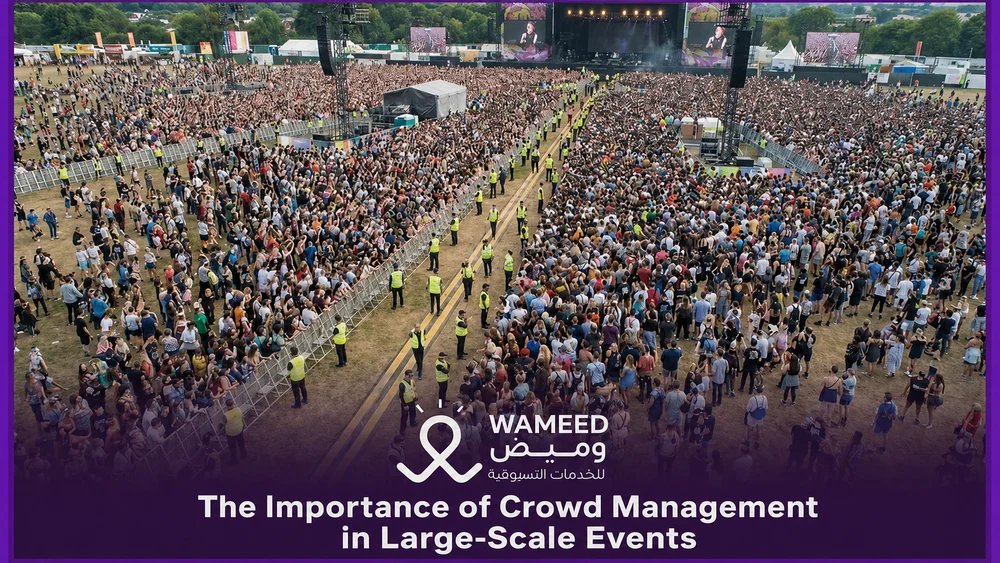
The Importance of Crowd Management in Large-Scale Events
Overview of Crowd Management in Major Events
Crowd management is one of the most critical elements in the success of large-scale events, whether they are conferences, exhibitions, concerts, or sports and entertainment gatherings. It is not limited to organizing the movement of attendees within the venue, but rather represents a comprehensive system aimed at ensuring safety, smooth flow, and a comfortable experience for everyone.
With the growing scale of events in major cities such as Riyadh and Jeddah, crowd management has become a strategic necessity that cannot be overlooked, as it is directly linked to public safety and the overall success of the event.
Concept and Objectives of Crowd Management
Crowd management is the process of organizing and directing the movement of people within and around the event site in a way that ensures safety, reduces congestion, and enhances the attendee experience.
Its primary goals include preventing overcrowding, managing entry and exit points, controlling crowd flow, and responding efficiently to emergencies. It also aims to create an organized environment where attendees can enjoy the event without stress or confusion.
Importance of Crowd Management in Large Events
The importance of crowd management lies in its role as a safety measure before being an organizational function. It protects lives, minimizes risks, and ensures the smooth operation of the event.
It also enhances the attendee experience, as visitors feel comfortable and well-guided from the moment they arrive until they leave, creating a positive impression of the event and its organizers.
The Relationship Between Crowd Management and Public Safety
Public safety is the top priority in any large event, and crowd management plays a central role in achieving it.
By organizing pathways, managing entry and exit points, and defining emergency zones, the risk of overcrowding, stampedes, or unexpected incidents can be significantly reduced.
Pre-Event Planning for Crowd Management
Planning is the first step in effective crowd management. It involves analyzing the venue, determining capacity, and distributing spaces accordingly.
It also includes mapping crowd flow, identifying potential congestion points, and preparing proactive solutions to handle them. Proper planning helps prevent issues before they occur.
Use of Modern Technologies in Crowd Management
Technology plays a vital role in improving crowd management. This includes electronic ticketing systems, smart surveillance cameras, and movement tracking tools.
Mobile applications can also guide attendees, send real-time notifications, and streamline entry and exit processes efficiently.
Role of On-Site Teams in Crowd Management
The success of crowd management heavily depends on the efficiency of on-ground teams, including organizers, security personnel, and supervisors.
These teams guide attendees, monitor movement, and respond quickly to any congestion or issues within the event.
Pathway Design and Movement Organization
Designing clear pathways within the event is one of the most important aspects of crowd management. Entry and exit routes, as well as internal movement paths, must be clearly defined.
This design helps distribute the crowd evenly and prevents bottlenecks, ensuring a smooth flow of movement.
Emergency Management During Events
An essential part of crowd management is being prepared for emergencies such as evacuations, medical incidents, or technical failures.
Clear evacuation plans must be in place, and teams should be trained to execute them quickly and efficiently to ensure attendee safety.
Enhancing Attendee Experience Through Crowd Management
Crowd management is not only about safety—it also plays a major role in enhancing the overall attendee experience.
When movement is smooth and entry is well-organized, attendees feel more comfortable and satisfied, which contributes to the overall success of the event.
Challenges in Crowd Management
Crowd management faces several challenges, including large audience numbers, diverse behaviors, and limited spaces.
Unexpected changes in schedules or external conditions can also affect operations, requiring flexibility and quick response from the team.
Importance of Experience in Crowd Management
Experience is a key factor in successful crowd management. It enables teams to anticipate issues and make fast, effective decisions.
Specialized companies have the expertise to handle different types of events and provide precise on-ground solutions.
Success Metrics for Crowd Management
The success of crowd management can be measured through several indicators such as smooth movement, reduced congestion, fast entry and exit, and attendee satisfaction.
Positive outcomes in these areas reflect effective organization.
Role of Event Management Companies in Crowd Control
Event management companies play a major role in executing crowd management plans professionally by providing trained teams and integrated systems.
They ensure that events are conducted with high standards of safety and quality.
Why Choose Wameed Marketing Services
Wameed Marketing Services is one of the specialized providers in event organization and crowd management, offering integrated solutions that include planning, execution, and on-site supervision.
The company relies on a professional team with strong experience in managing crowds at large-scale events, with a focus on safety, organization, and attendee experience.
Wameed aims to create a safe and well-structured environment that ensures the success of every event.
Conclusion
Crowd management is not just an organizational aspect; it is a fundamental factor in the success of any major event, combining safety, structure, and attendee experience.
If you are looking for a reliable partner to manage your event with the highest level of professionalism, Wameed Marketing Services offers the ideal solution to deliver safe, organized, and successful events.